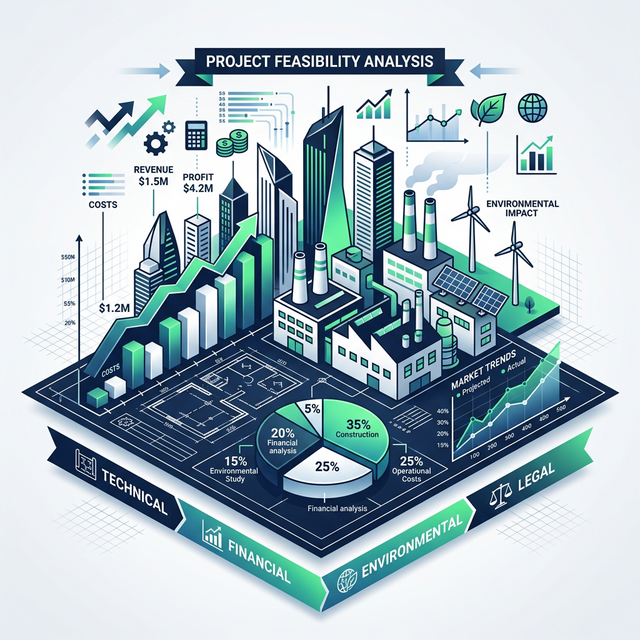
What are the Core Elements of a Project Feasibility Study?
A comprehensive project feasibility study goes far beyond a simple budget. It dissects every major aspect of the enterprise to ensure smooth operation when the project launches. The primary elements of an economic feasibility study include marketing, technical, financial, economic, social, environmental analysis, and sensitivity analysis. Let's delve into the most crucial aspects.
1. Marketing Feasibility
The most critical phase in determining project viability is understanding how you will market its output and secure its inputs. Without a precise analysis of the expected market, the operational plan will fail.
A proper marketing feasibility analysis mandates that the analyst identifies the points of sale, market breadth, and overall demand. It also requires innovative, attractive strategies covering the main 4 Ps: Product/Service, Price, Promotion, and Placement (Distribution). This ensures distinct competitive advantage against existing projects.
2. Technical Feasibility
Technical feasibility is the foundation upon which the financial, economic, and environmental studies rely. Without confirming technical viability, further studies are a waste of resources. This phase determines the site, equipment footprint, raw materials, workforce technical requirements, and production layout. This component relies heavily on data harvested during the marketing analysis phase.
3. Financial Feasibility
Once marketing and technical models are clear, we evaluate the project's costs and projected revenues. Capital costs in any project bifurcate into:
- Investment Costs (CapEx): These encapsulate all expenditures from initial ideation until the first normal operating cycle. They represent capital expenditure that services the business for longer than a year (e.g., initial construction, machinery, long-term loan interest).
- Current Operating Costs (OpEx): These denote short-term commitments required for an operating cycle, including raw materials, salaries, utilities, fuels, and rent.
4. Economic Feasibility
Economic evaluation is akin to financial evaluation but with a macroeconomic perspective. While financial feasibility uses market prices, economic feasibility focuses on measuring the return of the enterprise to society. It uses "Shadow Prices" that reflect the actual economic and societal values of resource flows, which occasionally differ remarkably from basic market prices.
5. Social and Environmental Feasibility
Social feasibility concerns fair income distribution among distinct societal stratas. It evaluates the project's impact on employment creation, especially for low-income populations. Environmental feasibility assesses positive and negative ecological impacts, providing actionable recommendations to curb environmental degradation and promote public health and regional welfare.
Conclusion
To embark on a commercial enterprise or expand into a new market carries inherent risks, compounded by swift economic shifts. Dissecting your project through the lenses of marketing, technical, financial, and environmental analysis is your premier safeguard against resource depletion and business failure.
Do you need a tailored Feasibility Study for your next big idea?
Avoid generic templates. Let's create a custom, data-driven feasibility study that accurately reflects your unique market position and guarantees investor confidence.
Request a Professional Consultation Now